Solved

Is there a way for us to apply a standard markup to all T&M jobs automatically?

  • September 28, 2026
  • 5 replies
  • 69 views

Forum|alt.badge.img+4

Is there a way for us to apply a standard markup to all T&M jobs automatically? Right now, we’re temporarily using T&M as a workaround due to the discrepancy between the estimated labor cost and the actual labor cost reflected in the P&L.

Best answer by Kbaird

I’ll throw my hat in the ring, 

There are 3 places where your labor costs are decided.

  1. In your item catalog. Most companies set up a labor item for each division they have. the cost per hour of this item (in my opinion) should be the average burdened labor cost per hour of your employees in that division. This becomes your estimated labor cost. This is a conversation to have with your accounting team. It will always be a little bit of a guess because you have to assume some of your burden and what is included.
  2. The contact level. Each employee should have a pay schedule with their current hourly pay and their burden rate. Depending on the employee, what programs they participate in (401k, PTO, etc), your individual burden will change. This is what turns into the actual labor cost. 
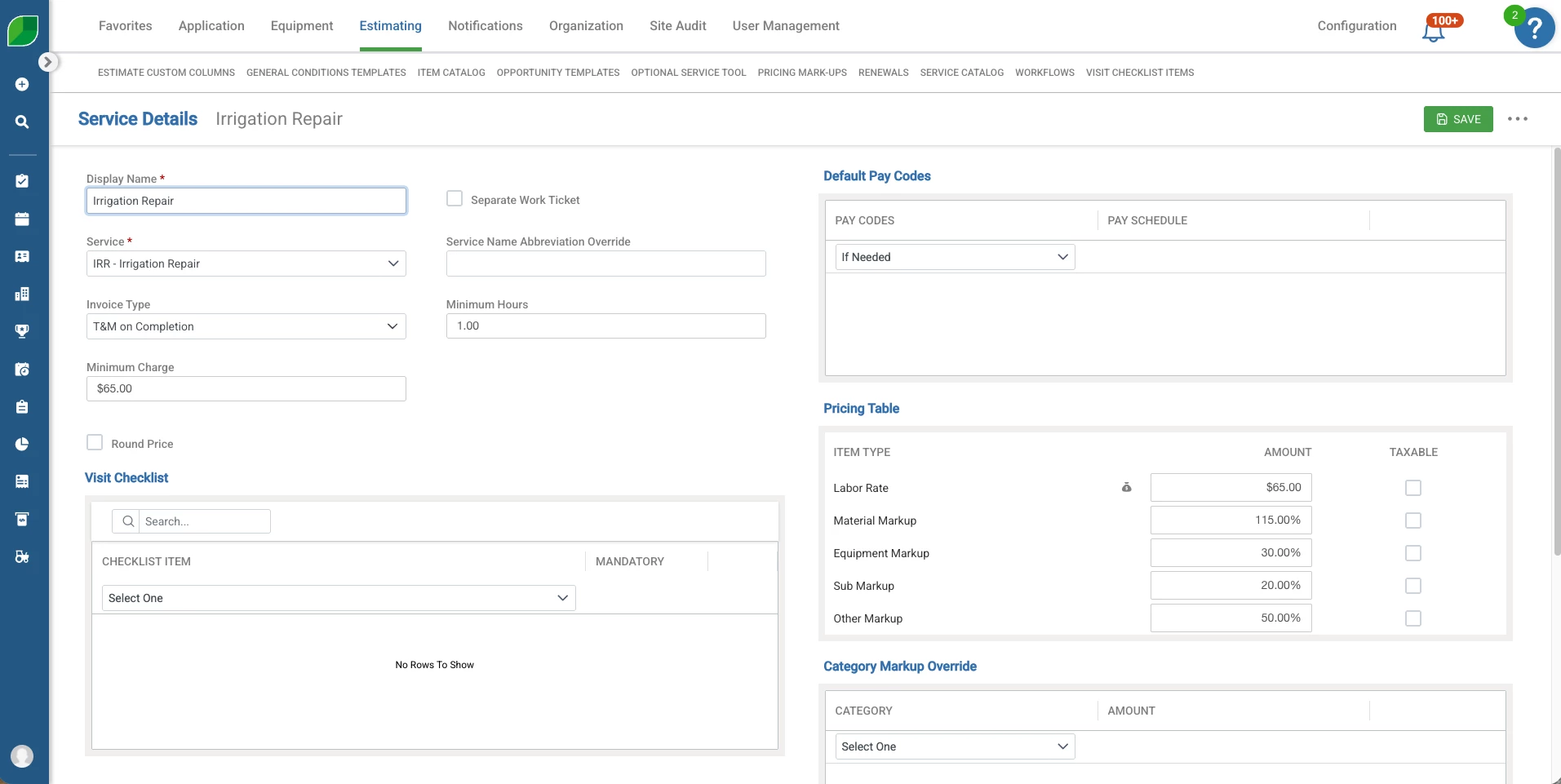
  3. Pricing markup table. This is where the markup multiplied by the labor cost gives you estimated labor price that the customer will see and pay. 

An example:

A burdened labor cost of an employee is $25/hr. The pricing markup table is set as 100%. The labor item in the catalog is set at a $30/hr cost. 

An estimate with 10 hours of labor will show an estimated labor cost of $300. The client will see a price of $600. The crew works all 10 hours. The job will only show an act labor of $250. ($25 burdened labor cost x 10 hours worked). 

5 replies

mhellweg
Forum|alt.badge.img+15
  • Inspiring
  • September 28, 2026

​@CPierceH I don’t believe there is a way to make a standard markup for all T&M jobs. The only thing we do is set up T&M templates with all the markups in them, that usually is enough to make it standard and easy for people making estimates. Can you give a little more info about what you mean with regards to the discrepancy between estimated and actual labor cost in the P&L and how T&M helps with that?


BHarwood
Forum|alt.badge.img+7
  • Participating Frequently
  • September 28, 2026

If you build an Opportunity Template you can set the Markups to the rates you want by clicking into the Service Details Screen. This should allow you to use the same markups every time you use that template.  

Feel free to DM me if you have any questions. 


David_Spiritus
Forum|alt.badge.img+16
  • Participating Frequently
  • September 28, 2026

​@mhellweg and ​@BHarwood are correct on approach to markup for T&M.  I am interested to understand your statement of "work around for the discrepancy between estimated labor cost and actual reported on the P&L?"


swirtholg
Forum|alt.badge.img+16
  • Inspiring
  • September 28, 2026

Could you create a T&M specific service and then apply the mark ups from the pricing and mark up table? 
I”m with ​@David_Spiritus that if its set up correctly there shouldn’t be disparities….


Kbaird
Forum|alt.badge.img+26
  • Genius
  • Answer
  • October 2, 2026

I’ll throw my hat in the ring, 

There are 3 places where your labor costs are decided.

  1. In your item catalog. Most companies set up a labor item for each division they have. the cost per hour of this item (in my opinion) should be the average burdened labor cost per hour of your employees in that division. This becomes your estimated labor cost. This is a conversation to have with your accounting team. It will always be a little bit of a guess because you have to assume some of your burden and what is included.
  2. The contact level. Each employee should have a pay schedule with their current hourly pay and their burden rate. Depending on the employee, what programs they participate in (401k, PTO, etc), your individual burden will change. This is what turns into the actual labor cost. 
  3. Pricing markup table. This is where the markup multiplied by the labor cost gives you estimated labor price that the customer will see and pay. 

An example:

A burdened labor cost of an employee is $25/hr. The pricing markup table is set as 100%. The labor item in the catalog is set at a $30/hr cost. 

An estimate with 10 hours of labor will show an estimated labor cost of $300. The client will see a price of $600. The crew works all 10 hours. The job will only show an act labor of $250. ($25 burdened labor cost x 10 hours worked).